Drug-injection equipment
Requiem for a DreamDrug-injection equipment in Requiem for a Dream is shown less as a set of described objects than as tools caught in a repeated, urgent routine. Droppers, a needle, and the characters’ works make injection possible, whether in a locked public toilet or a roadside rest stop. Their practical use brings temporary relief, but its repetition also makes the body itself a damaged and increasingly difficult place to inject. The equipment’s significance lies in that double role: it serves immediate need while materializing the characters’ dependence and the physical costs of sustaining it.
Forms and Use
The equipment is identified through actions and a small number of concrete terms rather than a technical inventory. Harry and Tyrone fill their droppers with water from a stained public-toilet bowl, after burning toilet paper to warm themselves. They use the improvised water and the drugs they have obtained, then lean against the walls of the cubicle as the effect brings warmth and eases their immediate discomfort. The episode places the tools of injection amid cold, dirt, and the lack of a private or suitable place to use them; the droppers remain useful even under these degrading conditions.
A later scene makes the equipment’s handling more visible. When Marion is trembling and struggling to inject herself, Harry helps prepare her arm, rubs it until a vein becomes visible, and guides the needle into it. As blood appears in the dropper, Marion takes over and squeezes the fluid into her vein. Afterward, she puts the works into a glass of water. The sequence gives the equipment a precise place in a shared procedure: Harry provides assistance, Marion completes the injection, and the used implements are set aside. The scene depicts neither the equipment as an abstract symbol nor the injection as a single isolated act; it shows practical motions embedded in dependence and mutual care.
Repetition and Bodily Consequences
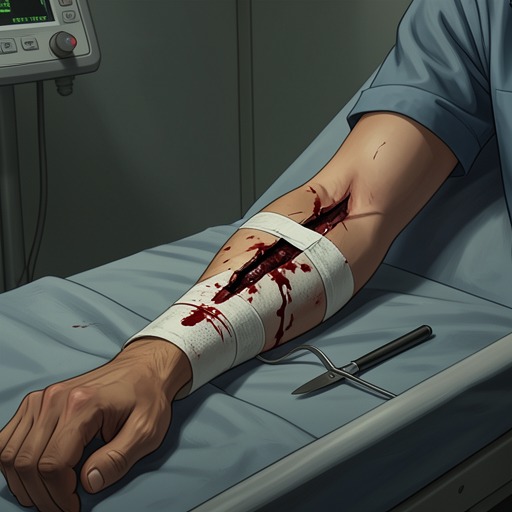
For Harry, injection becomes increasingly constrained by the condition of his body. During the drive toward Miami, he has trouble finding a vein and tries his fingers, which prove unsuitable. He repeatedly returns to a place on his arm that has been festering and has become a hole, despite making up his mind to avoid it. In the urgency of getting high, he cannot bear the effort of finding another site; he puts the needle into the damaged spot and injects there. The equipment still works, but its use now requires returning to an injury that he knows is worsening.
The roadside stop at a Howard Johnson’s gives this pattern another concrete setting. Harry and Tyrone go separately to the men’s room to inject. Harry tries to raise a usable vein in his right hand, cannot get one, and goes back to the hole in his left arm rather than risk missing the injection. It hurts intensely at first and then settles into a dull ache. The decision is not presented as a considered medical choice: the immediate fear of losing a dose determines where the needle goes, while pain becomes something to endure in exchange for the desired effect. The equipment’s recurring use is thus linked to a narrowing of viable options, from a sought-after vein to a damaged site used because it is available.
Shared Practice and Unequal Vulnerability
The equipment also belongs to relationships between users. Harry’s assistance to Marion is practical and intimate: he steadies her, finds a vein, and places the needle, then lets her control the dropper and finish the injection herself. Their exchange shows how care can operate inside a practice that is itself dangerous. Harry warns Marion that she will damage her veins, yet both know that substituting pills for injection will not feel equivalent to them. The warning does not interrupt the routine; after he helps, Marion injects, and the works are placed in water.
Harry and Tyrone likewise share the setting and rhythm of use, but their bodies do not face identical difficulties. Harry’s increasingly damaged arm becomes a specific obstacle during their journey, and Tyrone comments on its condition and urges him not to use that site again. The trip’s pauses for injections repeatedly interrupt travel: at the roadside stop they use separate stalls, then return to the car and continue toward their hoped-for supply. This recurrence makes the gear part of the logistics of the journey as well as its immediate bodily ritual. The intended destination is tied to plans for more drugs, while the instruments and repeated injections are already shaping how the men travel.
Narrative Significance
The equipment’s ordinary, functional presence gives the scenes their force. A dropper filled with water from a dirty toilet bowl, a needle returned to a festering hole, and works left in a glass of water are small material details, but they register how far the characters’ routines have displaced other concerns. Relief is real within each episode: the cold eases, the shaking is managed, or the pain briefly recedes. Yet each return to the equipment also renews the conditions that make another injection necessary, and Harry’s worsening arm shows that the cost cannot be kept separate from the momentary benefit.
The later arrest makes that bodily vulnerability especially stark. A police officer grabs Harry by the already bad arm and drags him to a car; Harry falls onto it and moans with pain. At the station he asks to see a doctor, but the request is dismissed. The equipment is not itself present in that confrontation, yet the injury produced and aggravated through the preceding pattern of injection follows him into custody, where he has little control over how the damaged arm is handled or when it will receive attention. Across these scenes, the implements remain materially modest, but their consequences extend from private rituals of use into travel, injury, and the characters’ exposure to other people’s power.